12 Reasons Why A Truck Camper Is Superior To Any Other RV
Trying to make up your mind on what type of RV to get? We have had several and our favorite RV so far is our truck camper–here is why.
(Links in this post are affiliate links. I will be compensated when you make a purchase by clicking those links. See disclosure page for more information.)
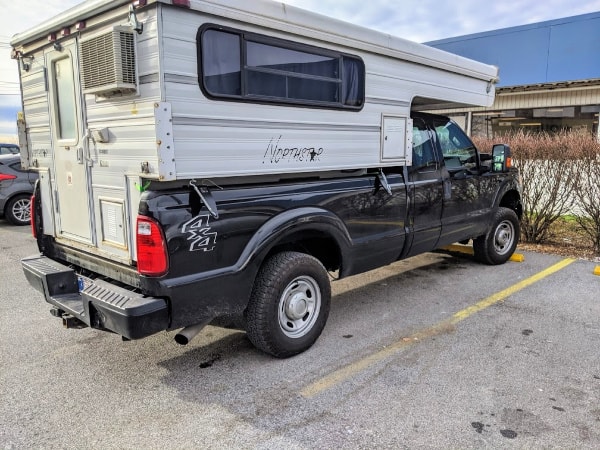
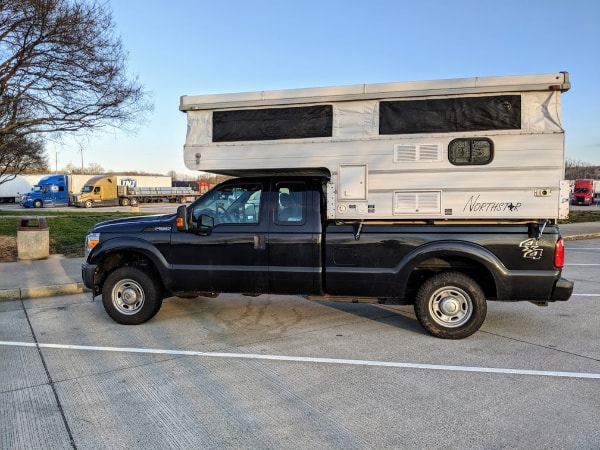
My husband and I have owned various tents, two pop-ups, two travel trailers, a homemade minivan camper, and a DIY truck topper camper. Our newest camper purchase is a Northstar Pop-up slide-in truck camper and it is our favorite rig so far.
During our second outing with it, we started listing all the reasons why we loved it more than our other camping setups and then I thought, what a perfect way to tell blog readers why they too might want to purchase a truck camper instead of the other rigs and tents you can camp in.
Our Honest Take on the Best Way to Explore the Open Road
Keep in mind that other camping setups might check off a few items on this list too, but only a truck camper lets you do all 12.
1. You Fit In A Regular Parking Spot
When we traveled for five and a half months with our three kids in a 27 1/2 foot Jayco travel trailer, we soon realized that a significant drawback of such an extended trailer is that it limits where you can park. For instance, on travel days, you can’t just swing through a drive-thru and order lunch for the family like you can on a road trip in the family van. You also don’t fit in the average fast-food parking lot.
With a truck camper, you might be too high for some drive-thrus with an overhang, but you still fit in their parking lots. You might not be able to park in the multi-level parking complexes, but you still fit in street parking spots.
2. You Can Cook A Meal Wherever You Are
In our DIY minivan camper, we had to cook our meals outdoors. We felt okay opening up the back and assembling a sandwich in the parking lot of the hiking trail, but other places it felt weird to make food. For instance, when campgrounds were full during a trip to Florida, we camped in a Walmart for a night. To us, it just felt wrong to set up a table and plop our Coleman camp stove on it and start cooking dinner in the parking lot (plus, I think it is frowned upon to do so).
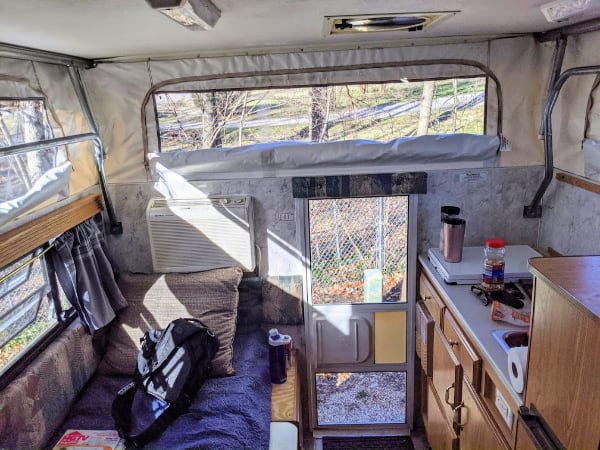
In our Northstar, we have plenty of room and ventilation to use the indoor propane stove so we can cook without others watching. We have pulled over in a Walmart parking lot to make a hot dinner one night before pushing on to our final destination for the day. We have also assembled lunch in the parking lot of a crowded Kentucky park and made breakfast several times at a rest area. Every time we have done so, we haven’t felt the least bit self-conscious.
3. You Can Grab Warmer Or Cooler Clothes Whenever You Need To
When you drop your travel trailer off at the campground and then take off in your tow vehicle to explore the local area for the day, you have access only to what you pack in the tow vehicle for the day.
We were exploring Elizabethtown, KY in our truck camper on a day that went from hot to cold rather rapidly. I was getting chilled and you should have seen my face when I realized I could unlock the camper and jump in and change my outfit to suit the changing weather–total lightbulb moment.
4. Tired? Take A Nap Pretty Much Anywhere
On our date weekends, my hubby has one request–he wants a nap. On the other hand, I am not much of a napper, but knowing that our date weekend is a rare full weekend off work for my husband, I happily let the hardworking guy take a nap.
When we traveled with a travel trailer, we had to plan our day around his nap time. With the slide-in truck camper he can pop in the camper and take a nap whenever he has the urge. He doesn’t even need to put it up as there is a single bed on the main level and two windows he can open for ventilation.
While he naps, I am free to spend time in the local coffee shop, or explore one more hiking trail or read a book in the cab of the truck.
5. Much Easier To Take Advantage Of Free Campsites
We are glampers! We like to be warm when it is cold and cool when it is hot. We want access to a flushing toilet and a hot shower so we pay for campsites more than we take advantage of free ones.
But we both agree that when we leave town on a Friday night past dinner time with 6 hours or so to our destination, it makes more sense to camp somewhere for free whenever we get tired than to arrive at our destination at an hour where we would disturb others while we try to set up.
It is so much easier to do this with a truck camper as it takes seconds to set up and it fits in a regular parking spot. Plus, with it being on the back of our truck, we don’t have to worry about the conditions of the roads that go to free wilderness campsites like we did with a travel trailer.
6. You get Better Gas Mileage
When we pulled our travel trailer, we got 8 miles to the gallon with a 1500 GMC. We now own a Ford F250 and get 12 miles to a gallon when the truck camper is on the back. Yep, a bigger truck and we still get better gas mileage. Over time and miles traveled, the fuel savings will be significant.
7. Unplanned Stops Are More Doable
Spontaneity is especially tough with a trailer in tow. You can’t see something on a road sign and just turn off the highway and go for it. You have to check if they have parking for your tow vehicle and trailer and a place to turn around.
8. You Can Navigate The Smallest Of Gas Stations
I wish that I had known about the All-Stays app before we left on our journey across North America pulling a 28-foot trailer behind us–it would have made gas station stops a whole lot easier. The app shows you which gas stations are coming up so that you can see if you can last until the next larger gas station that is travel trailer friendly.
With our truck camper, we don’t use the app to pick out our gas stops; instead, we use it to find free places to camp. Why the change? We can now get in and out of any gas station with ease–especially since our truck camper is a pop-up.
9. It Doesn’t Have An Engine Or Tires
For a brief period of time, my husband and I did seriously consider purchasing a van that we can stand up in, gutting it, and then building it into a camper. But we soon realized that would mean we would have another engine to repair.
A truck camper has no engine and no tires. Tires are yet another expense that comes with both travel trailers and camper vans or Class As, Bs, and Cs.
10. It Doesn’t Require Extra Insurance (at least not where we live)
I was shocked when I found out this benefit because I thought for sure a slide-in camper would need to be insured and have vehicle registration (in some places it does).
Now, I am not an insurance expert so you need to consult your local insurance agent to see what the rules are in your state, but where we live no extra insurance or registration is required for a truck camper. The truck camper is covered by our home owner’s insurance when stored on our property and by our vehicle insurance when on the camper. We don’t take the camper off the truck when we get to the campsite; however, if you plan to take the truck camper off the truck while at the campsite, you might want to purchase a separate policy for it. At least that is what I interpreted the information that I read–again; I am unable to give insurance advice.
11. It Can Be Stored In A Smaller Space
We store our truck camper inside my husband’s workshop that has a garage door. Jack backs up the truck and sets down the slide-in camper for the next time we need it.
Our 28-foot trailer required us to give up a sizable portion of our backyard to create a parking space that could be accessed from the alley. It meant we had to spend a few weekends tearing up the grass, moving fence, and then laying down gravel.
If you live in a subdivision that doesn’t allow a travel trailer to sit in your driveway and you have a high enough garage door, you might be able to fit a truck camper in it and save yourself the bill of an RV storage facility.
12. You Can Tow Something Behind It
We have not done this, at least not yet, but a truck camper uses your vehicle’s haul weight, which does not affect the towing capacity. What that means is if you own a fishing boat, you can have a truck camper on the back of your truck and tow the boat on a trailer behind you (you do need to check the haul and towing capacity of your truck before you do this).
You could tow other items too–like an ATV, a canoe trailer with canoes, or Kayaks. If you wanted to, you could even pull a travel trailer or pop up behind you–although why?
If you get a travel trailer, you can put things in the back of your truck up to the weight of your vehicle haul capacity, but a truck bed isn’t big enough for a lot of outdoor items like fishing boats.
The Top 4 Big Reasons Not To Buy A Truck Camper
I don’t believe that any purchase comes without its cons and I would feel like I was not entirely honest about truck campers if I didn’t share a few things that might make them not for you and your family.
1. Most Don’t Sleep More Than Three People Comfortably
Except for the biggest models, most truck campers have a queen bed in the loft area and a dinette that makes into a twin bed or a Jackknife couch that is just wider than a twin. If you are a family of larger than three, a truck camper probably isn’t for you.
2. You Have To Have A Bigger Truck
We first started looking at slide-in truck campers when we had a GMC 1500 Sierra and were shocked that even the lightweight truck camper models were over the hauling capacity of the truck. This is why we made our own truck topper camper in the GMC, which we used until the truck died.
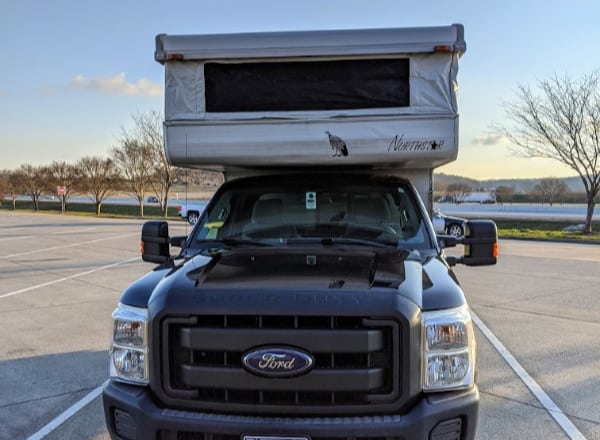
When we replaced the truck, we knew we needed one with a hauling capacity of close to 3,000 pounds to be able to get the style of truck camper we wanted and to pack along what we like to pack. That meant we needed a Ford F250 or similar truck.
A bigger truck costs more to purchase and offers lower gas milage. If you don’t have a use for a larger vehicle besides hauling or towing a trailer, you might want to look into a lightweight pop up camping trailer which can be towed by a minivan or small SUV.
3. Only The Biggest Models Have Indoor Showers And Traditional Flush Style Toilets
This, to me, is the biggest drawback of getting a smaller pop-up style slide-in truck camper. My husband’s brother and sister-in-law just bought a larger truck camper with a traditional style roof and they have a wet bath that I am envious of. However, to safely haul such a trailer, we would have had to go with an F350 and we decided it just wasn’t worth the extra purchase cost and fuel cost for the one weekend a month of camping we average.
4. It Does Take Practice To Get Them On An Off Your Truck Safely
Truck campers have a post on each corner that can be cranked up and down to allow the camper to be put on your truck with ease. Well, not ease, the clearance between the exterior of your truck bed and the posts is extremely minimal, meaning you have to be a pro at backing up straight into tight spaces to get a truck camper on and off.
Then there is the issue of it shifting while you are driving if it isn’t properly tied down to your truck. The first time we took ours out, the bolting system we used had a bit of play; we thought that was okay–it wasn’t. The camper slid back a foot in the bed of the truck when we went up a steep hill. Thankfully it only slid that one foot and we were able to pull over soon and put an end to the problem.
Even With Their List Of Cons, I Think Truck Campers Rock For Couples
When we camped with three children, truck campers were not an option–they were too small. But now that we are a camping couple a truck camper rocks. I would recommend a truck camper over any other style of RV to couples young and old who want to get out and explore on weekends.
Ours has taken us so many places we could never take our travel trailer and we have only owned it a few short months.
Can’t afford a slide-in truck camper, but you already own a truck and topper?
Are you looking for an alternative to busy and expensive campgrounds and one-night Walmart stops on the way to your destination? Check out our post about our first time using Boondockers Welcome.